Purpose
SupportLogic provides administrators with the ability to manage user access to specific modules, configure roles and permissions, and restrict data visibility based on defined case attributes and ownership.
This article explains how to create and configure user roles, manage permissions, and define access scopes to ensure users can access only the relevant information and functionality within SupportLogic.
Summary
Administrators with access to the Control Center can manage user access and configure role-based permissions and data restrictions.
There are three key areas involved in configuring the user experience:
Settings > Users (Manage Users): Create and manage user accounts, assign roles, and configure user-level access.
Settings > Roles and Permission: Create and manage roles, define permissions, and configure case visibility restrictions.
To configure user access effectively, follow these steps:
Define the data scope for users.
Create or modify user roles.
Configure case field scope and case owner scope.
Configure role-based permissions.
Configure module visibility for user profiles.
Create user accounts and assign the appropriate roles.
Validate the configured access.
Note: If you need to create more than 30 users, please contact SupportLogic Support by submitting a support ticket to request assistance with bulk user creation
Step-by-Step Guide
1. Configure Roles and Permissions
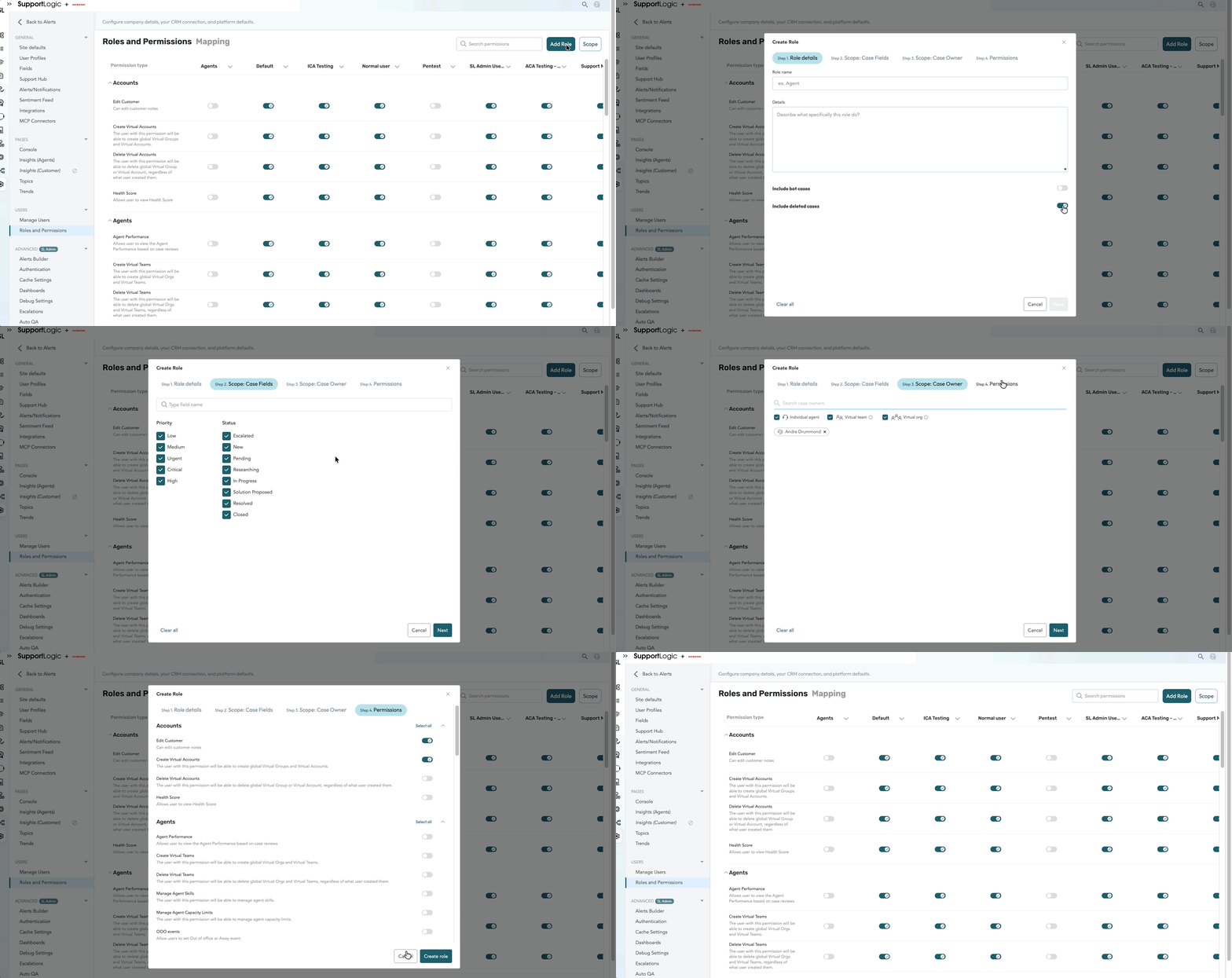
Navigate to Settings > Roles and Permission.
Here, administrators can view existing roles and their associated permissions.
You can:
Create a new role.
Duplicate an existing role.
Modify an existing role.
Configure the scope of data accessible to users assigned to the role.
To configure an existing role:
Navigate to Settings > Roles and Permission.
Locate the role you want to configure.
Click the dropdown next to the role name.
Select Edit Role.
The Edit Role window provides the following configuration sections:
Role details
Scope: Case Fields
Scope: Case Owner
Permissions
2. Configure Case Field Scope
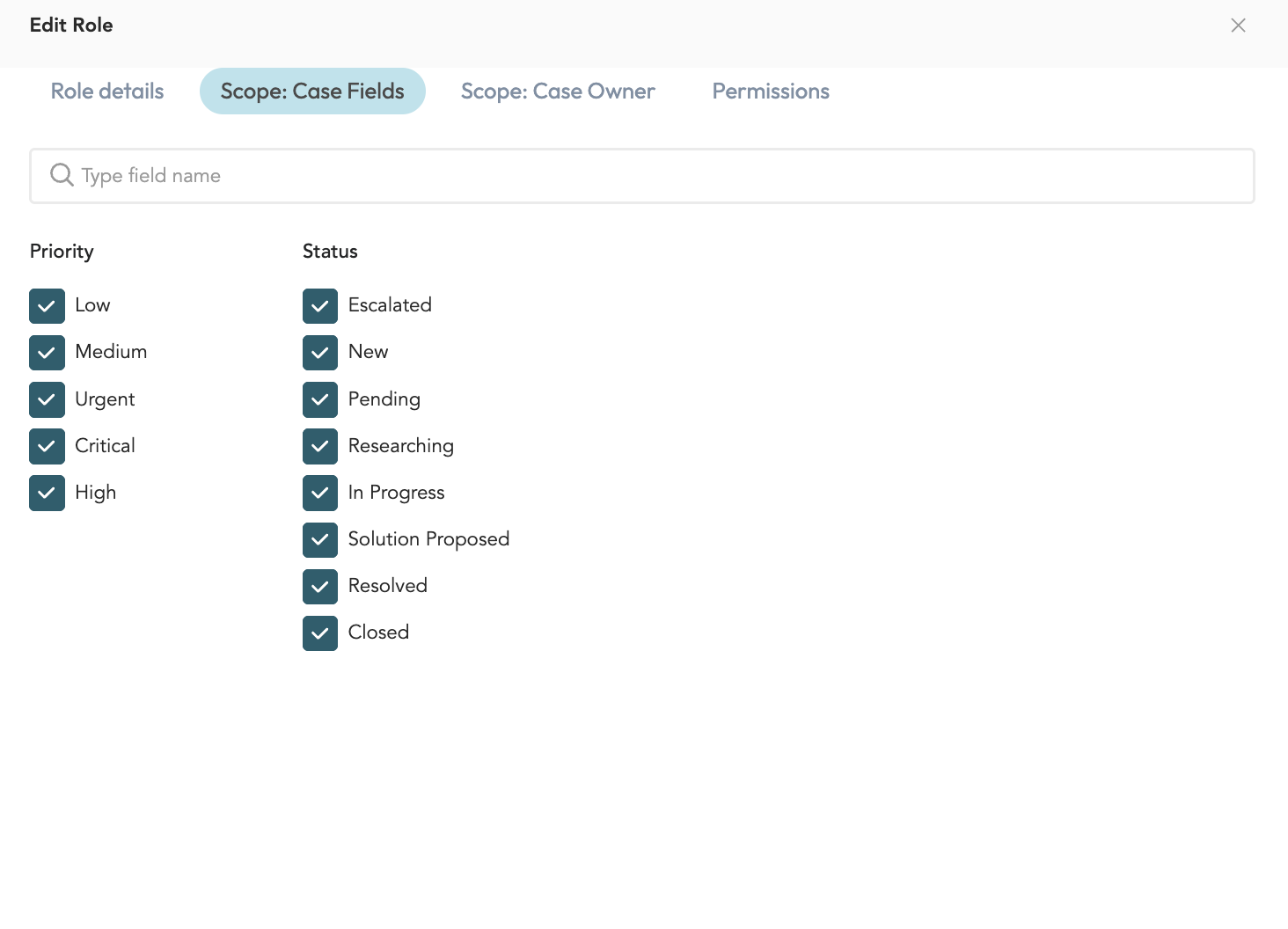
The Scope: Case Fields section allows administrators to restrict case visibility based on selected case field values.
For example, administrators can control which case priorities and statuses are accessible to users assigned to a particular role.
To configure Case Field Scope:
Open the role using Edit Role.
Navigate to the Scope: Case Fields tab.
Use the search field to locate a specific case field, if required.
Select or deselect the available values to define the permitted scope.
The available options shown in the configuration include:
Priority
Low
Medium
Urgent
Critical
High
Status
Escalated
New
Pending
Researching
In Progress
Solution Proposed
Resolved
Closed
Select the values that should be accessible to users assigned to this role.
Deselect any values that should be excluded from their scope.
Use Clear all if you want to clear the current selections.
Click Next to continue with the remaining role configurations.
Note: The selected case field values determine the case data included within the role's configured scope.
3. Configure Case Owner Scope
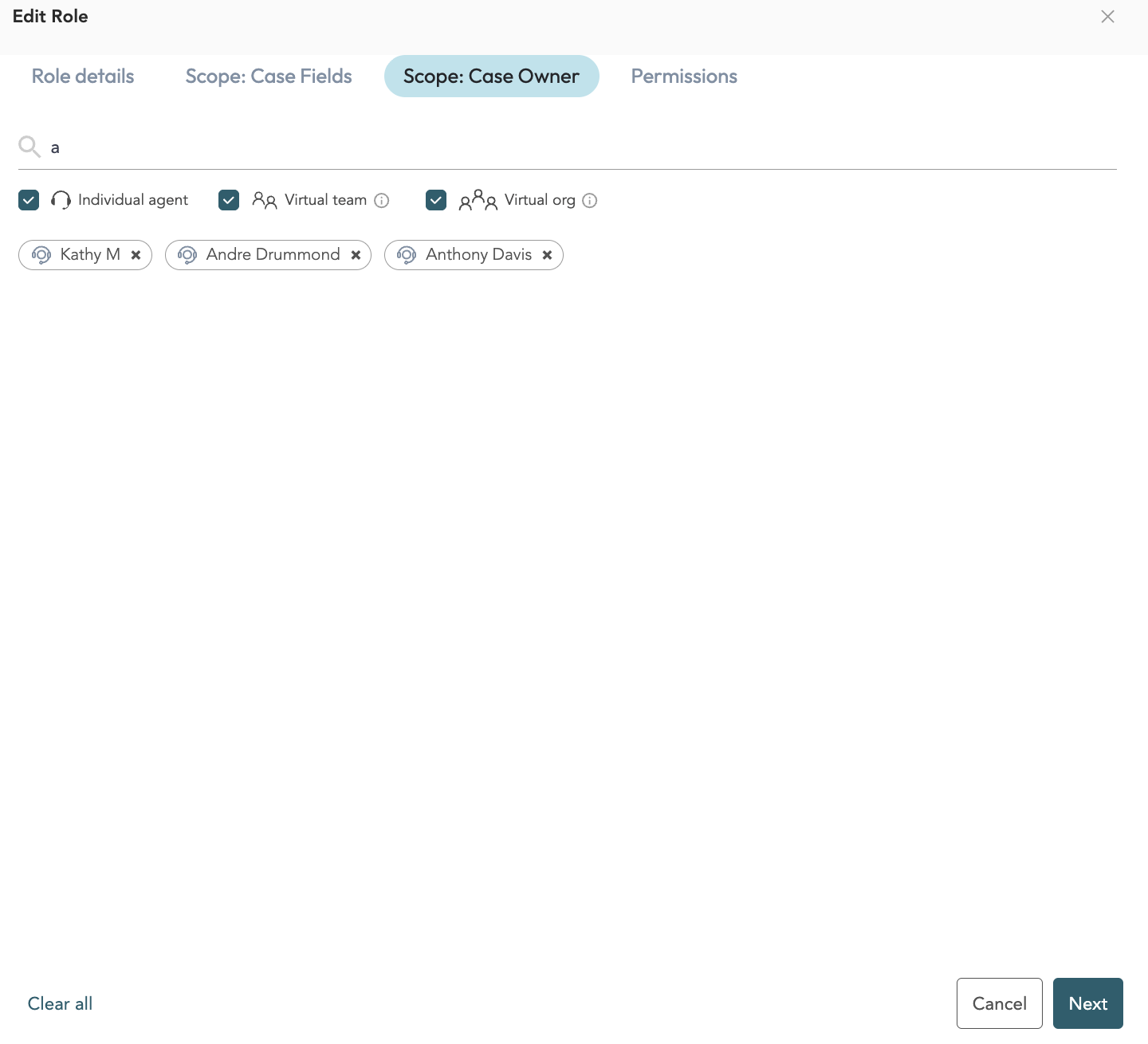
The Scope: Case Owner section allows administrators to further restrict case visibility based on case ownership.
To configure this:
Open the role using Edit Role.
Navigate to the Scope: Case Owner tab.
Review the available case owner options.
Select the owners or ownership criteria that users assigned to this role should have access to.
Exclude any owners that should not be included in the role's scope.
Click Next to proceed.
This configuration helps administrators control case visibility based on ownership requirements.
6. Create and Configure User Accounts
Once the role, permissions, and scope configurations are complete, administrators can create user accounts.
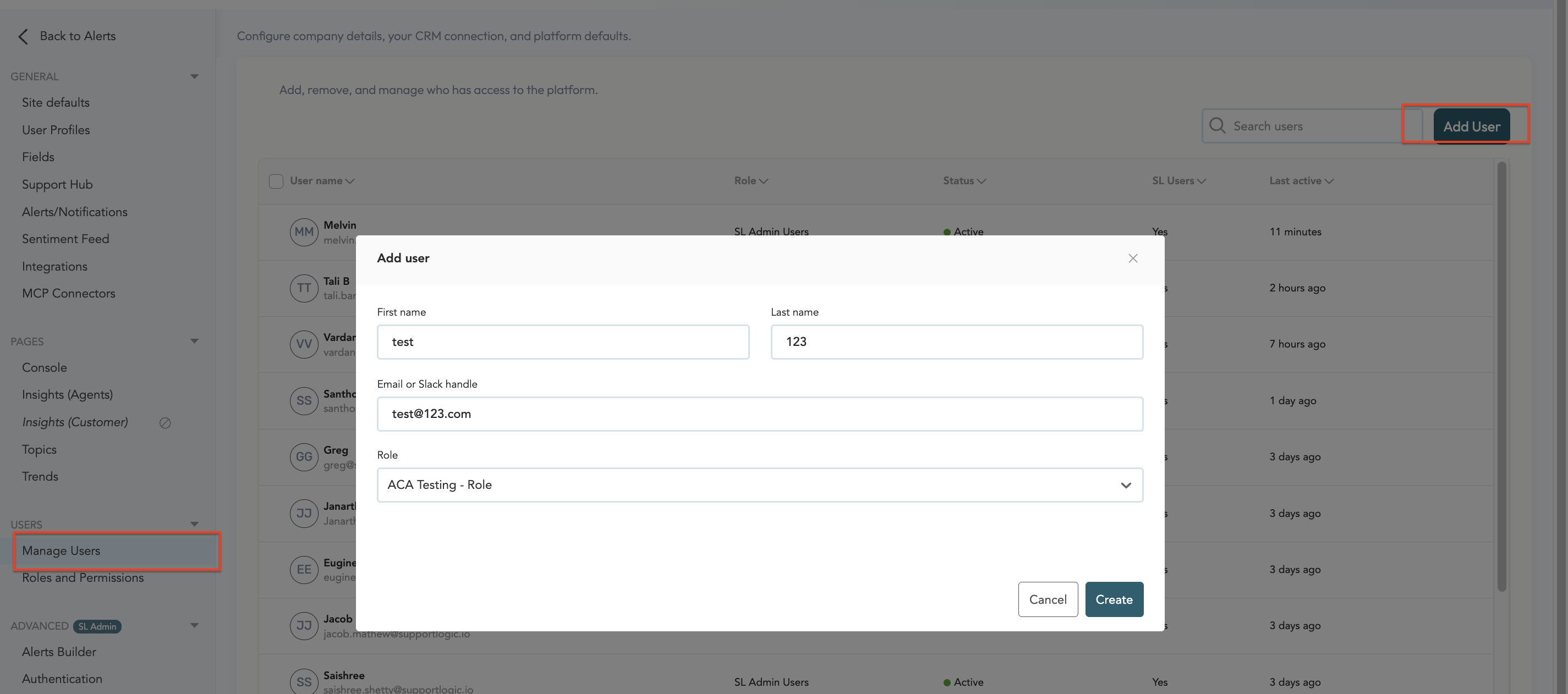
Navigate to Settings > Users (Manage Users).
Select the option to create a new user.
Enter the required user details.
Assign the appropriate user profile and role.
Review the configured access and permissions.
Save the user account.
For existing users, administrators can also update their assigned roles and access configurations as required.
7. Validate User Access
After completing the configuration, verify that the assigned role and permissions are working as expected.
Check the following:
Users can access only the permitted modules.
Case visibility follows the configured case field scope.
Case visibility follows the configured case owner scope.
Users can perform only the actions enabled through their assigned permissions.
Restricted data and functionality are not accessible.
Conclusion
By configuring Roles and Permissions, Case Field Scope, Case Owner Scope, and User Profiles, administrators can establish a controlled and customized user experience within SupportLogic while ensuring users have access to the appropriate data and functionality.
Was this article helpful?
That’s Great!
Thank you for your feedback
Sorry! We couldn't be helpful
Thank you for your feedback
Feedback sent
We appreciate your effort and will try to fix the article